
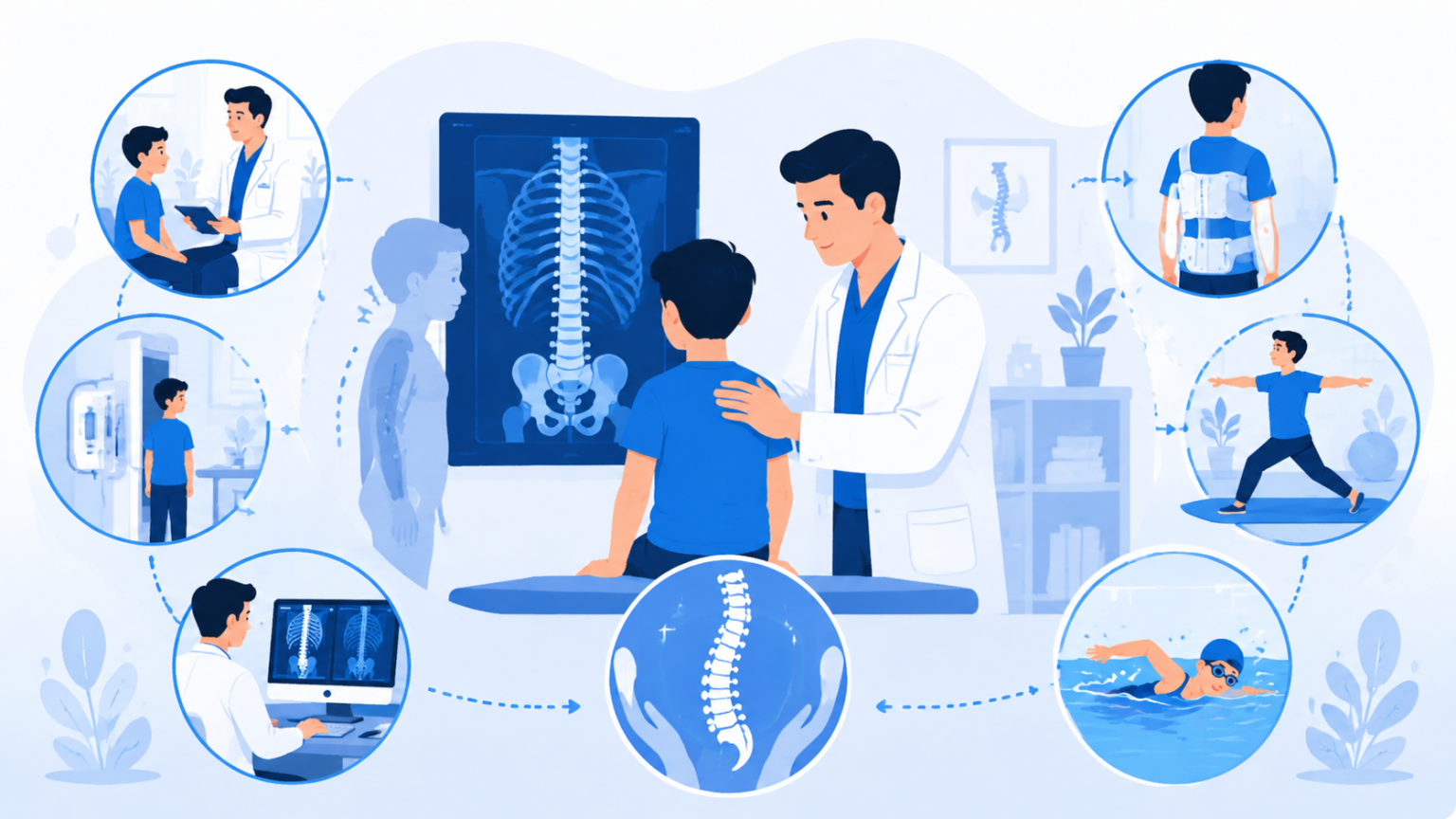
Scoliosis is one of the most common spinal conditions affecting children and adolescents. While many parents have heard of scoliosis, they may not recognize the early warning signs until the condition has progressed. Early diagnosis and proper treatment can make a significant difference in a child’s spinal health, mobility, and quality of life.
At Texas Spine Group, Dr. Muhammad Zain Mirza, M.D., provides comprehensive scoliosis care for children throughout Texas. As a board-certified and fellowship-trained orthopedic spine surgeon, Dr. Mirza specializes in both non-surgical and surgical treatment options, helping families make informed decisions about their child’s spine health.
Whether your child has recently been diagnosed with scoliosis or you are concerned about possible scoliosis symptoms children may be experiencing, understanding the condition is the first step toward effective treatment.
Understanding Scoliosis in Children
Scoliosis is a condition where the spine develops an abnormal sideways curve. Instead of appearing straight when viewed from behind, the spine curves into a “C” or “S” shape.
Most pediatric scoliosis cases are classified as idiopathic scoliosis, meaning the exact cause is unknown. The condition commonly develops during periods of rapid growth, particularly between ages 10 and 18.
While some spinal curves remain mild and stable, others can worsen over time, especially during growth spurts. This is why early identification and regular monitoring are essential.
Early Signs of Scoliosis Parents Should Watch For
The early signs of scoliosis can be subtle. Many children do not experience pain initially, making visual changes the most common warning signs.
Parents should watch for:
- Uneven shoulders
- One shoulder blade sticking out more than the other
- Uneven waistline
- One hip sitting higher than the other
- Clothes fitting unevenly
- A visible curve in the spine
- One side of the rib cage appearing higher when bending forward
- Head not centered over the pelvis
- Changes in posture
- Back fatigue after prolonged standing
These pediatric scoliosis warning signs should not be ignored. Early evaluation by a spine specialist Texas families trust can help determine whether treatment is necessary.
Why Early Detection Matters
Early detection allows physicians to monitor spinal development before the curve becomes severe.
Benefits of early scoliosis diagnosis in children include:
- More treatment options
- Reduced risk of curve progression
- Better long-term outcomes
- Lower likelihood of needing extensive surgery
- Improved posture and spinal alignment
- Greater opportunity for non-surgical treatment
When scoliosis is identified early, treatment plans can often be tailored to slow or prevent curve progression during growth.
How Dr. Zain Diagnoses Scoliosis in Children
At Texas Spine Group, every scoliosis evaluation begins with a comprehensive assessment.
Medical History Review
Dr. Mirza discusses:
- Family history of scoliosis
- Growth patterns
- Symptoms
- Activity limitations
- Previous evaluations or treatments
This information helps identify potential risk factors and determine the likelihood of progression.
Physical Examination
A detailed physical examination evaluates:
- Shoulder alignment
- Hip symmetry
- Posture
- Spinal flexibility
- Walking pattern
- Neurological function
The goal is to identify visible signs of spine curvature in kids and assess overall spinal health.
Forward Bend Test
One of the most common scoliosis screening methods is the forward bend test.
During this examination, the child bends forward while the physician observes for:
- Rib prominence
- Uneven back contours
- Spinal rotation
- Visible asymmetry
This simple test often reveals scoliosis that may not be noticeable while standing upright.
Diagnostic Imaging
When scoliosis is suspected, imaging studies may be recommended.
These may include:
- Standing X-rays
- Full-spine imaging
- Growth assessment imaging
X-rays help measure the Cobb angle, which determines the severity of the spinal curve and guides treatment recommendations.
Personalized Scoliosis Treatment at Texas Spine Group
Every child’s scoliosis is unique. Dr. Mirza develops individualized treatment plans based on:
- Age
- Growth potential
- Curve size
- Curve location
- Symptoms
- Risk of progression
- Activity level
Treatment may involve observation, bracing, physical therapy, or advanced surgical intervention.
Observation for Mild Curves
Not every child with scoliosis requires active treatment.
Observation may be recommended when:
- The curve is mild
- Growth remains stable
- Progression risk is low
- Symptoms are minimal
Regular follow-up appointments allow Dr. Mirza to monitor changes and intervene if necessary.
Bracing for Moderate Scoliosis
Bracing is often recommended for children who:
- Are still growing
- Have moderate spinal curves
- Show signs of progression
The primary goal of bracing is to prevent the curve from worsening during growth.
Benefits of bracing may include:
- Slowing progression
- Delaying surgery
- Maintaining spinal alignment
- Supporting long-term spinal health
Proper brace use and routine monitoring are essential for successful outcomes.
Physical Therapy and Rehabilitation
Physical therapy may play an important role in scoliosis management.
Therapy programs often focus on:
- Core strengthening
- Flexibility improvement
- Postural correction
- Movement efficiency
- Functional stability
Although physical therapy typically does not eliminate structural scoliosis, it can improve overall comfort and mobility.
Advanced Spine Care for Severe Scoliosis
When scoliosis continues to progress despite conservative treatment, advanced intervention may be necessary.
Dr. Mirza specializes in complex spinal procedures designed to restore alignment and protect long-term function.
Advanced treatment goals include:
- Correcting spinal deformity
- Preventing further progression
- Improving posture
- Protecting nerve function
- Supporting long-term mobility
When Is Surgery Recommended?
Surgery is generally reserved for more severe scoliosis cases.
Surgical treatment may be considered when:
- The curve exceeds recommended thresholds
- Progression continues despite bracing
- Significant deformity develops
- Breathing capacity becomes affected
- Daily activities are limited
- Neurological symptoms occur
Dr. Mirza carefully evaluates every patient before recommending surgery and discusses all available options with families.
Minimally Invasive and Advanced Surgical Techniques
At Texas Spine Group, advanced technology is incorporated whenever appropriate.
Modern surgical approaches may provide:
- Smaller incisions
- Reduced tissue disruption
- Less postoperative discomfort
- Faster recovery
- Improved surgical precision
The goal is always to achieve the best possible outcome while minimizing recovery challenges.
Why Families Choose Texas Spine Group
Families throughout Texas trust Texas Spine Group because of its patient-centered approach and advanced expertise.
Benefits of choosing Texas Spine Group include:
- Board-certified orthopedic spine expertise
- Fellowship-trained spinal surgery experience
- Personalized treatment plans
- Advanced diagnostic technology
- Minimally invasive treatment options
- Comprehensive surgical and non-surgical care
- Long-term wellness focus
- Compassionate patient support
Dr. Mirza works closely with families to ensure they understand every aspect of their child’s condition and treatment plan.
When Should Parents Schedule a Spine Evaluation?
Parents should consider scheduling an evaluation if they notice:
- Uneven shoulders
- Uneven hips
- Visible spinal curvature
- Rib prominence
- Poor posture
- Back asymmetry
- Family history of scoliosis
- Concerns raised during school screenings
Early evaluation provides peace of mind and helps ensure timely treatment when necessary.
Conclusion
Scoliosis can be a concerning diagnosis for families, but early intervention and expert care can make a significant difference. Recognizing scoliosis symptoms children experience and seeking prompt evaluation can help prevent progression and support healthy spinal development.
At Texas Spine Group, Dr. Muhammad Zain Mirza, M.D., provides comprehensive scoliosis treatment Texas families can trust. From early diagnosis to advanced spine care, every treatment plan is designed around the individual needs of the child.
If you are concerned about a crooked spine in children, early signs of scoliosis, or spine curvature in kids, now is the time to take action. Visit our contact us page or book appointment with Texas Spine Group to schedule a comprehensive evaluation.
FAQs
What are the earliest signs of scoliosis in children?
Common early signs include uneven shoulders, uneven hips, rib prominence, posture changes, and a visible curve in the spine.
At what age does scoliosis usually develop?
Scoliosis commonly develops between ages 10 and 18 during periods of rapid growth.
Does scoliosis cause pain in children?
Many children experience little or no pain initially, although some may develop discomfort as the curve progresses.
How is scoliosis diagnosed?
Diagnosis typically involves a physical examination, forward bend test, and spinal imaging such as X-rays.
Can scoliosis get worse over time?
Yes. Scoliosis may progress during growth spurts, making early monitoring important.
Do all children with scoliosis need surgery?
No. Many children are successfully treated with observation, bracing, or physical therapy.
Can a brace cure scoliosis?
Braces are designed to slow or prevent progression rather than completely correct the curve.
Is scoliosis hereditary?
Family history may increase the likelihood of developing scoliosis, although not every case is inherited.
When should I see a scoliosis doctor in Texas?
You should seek evaluation whenever you notice posture changes, spinal asymmetry, or concerns raised by a pediatrician.
Why choose Texas Spine Group for pediatric scoliosis care?
Texas Spine Group offers advanced diagnostics, personalized treatment plans, and expert care from Dr. Muhammad Zain Mirza, a board-certified and fellowship-trained orthopedic spine surgeon.
Disclaimer
This article is intended for educational purposes only and should not be considered medical advice. Every child’s condition is unique. Always consult a qualified healthcare professional for diagnosis, treatment recommendations, and individualized medical guidance.


